Showing posts with label identity. Show all posts

Thursday, March 4, 2021

Credential Stuffing: Why It’s Here to Stay

Over the last few years, #F5 security researchers have identified credential stuffing as one of today’s foremost threats. The value of stolen credentials has created a vicious circle: organizations suffer network intrusions in pursuit of credentials, and credential stuffing in pursuit of profits. Understanding both the supply and demand sides of the market for stolen credentials is, therefore, key to understanding the risk that cybercriminals pose to organizations today. With 5 years of data, it is definitive: credential spills are here to stay. So, let’s start the clock for some harrowing data from the 2021 Credential Stuffing Report.

Get your copy: https://www.f5.com/labs/articles/threat-intelligence/2021-credential-stuffing-report


Saturday, December 26, 2020

Phishing During a Pandemic

 #F5Labs 2020 Phishing and Fraud Report. #Phishing remains a popular method of stealing credentials, committing fraud, and distributing malware. In its crudest forms it might appear to be juvenile; but it’s often part of a well-orchestrated, multi-faceted, and sustained attack campaign by organized crime groups. Get all the details of Phishing & Fraud trends for 2020: https://www.f5.com/labs/articles/threat-intelligence/2020-phishing-and-fraud-report


Tuesday, March 14, 2017

Social Login to Enterprise Apps using BIG-IP & OAuth 2.0

Password fatigue is something we’ve all experienced at some point. Whether it’s due to breaches and the ever present, ‘update password’ warnings, the corporate policy of a 90-day rotation or simply registering for a website with yet another unique username and password. Social login or social sign-in allows people to use their existing Google, Twitter, Facebook, LinkedIn or other social credentials to enter a web property, rather than creating a whole new account for the site. These can be used to authenticate, verify identity or to allow posting of content to social networks and the main advantage is convenience and speed.

With v13, BIG-IP APM offers a rich set of OAuth capabilities allowing organizations to implement OAuth Client, OAuth Resource Server and OAuth Authorization Server roles to implement social logins.

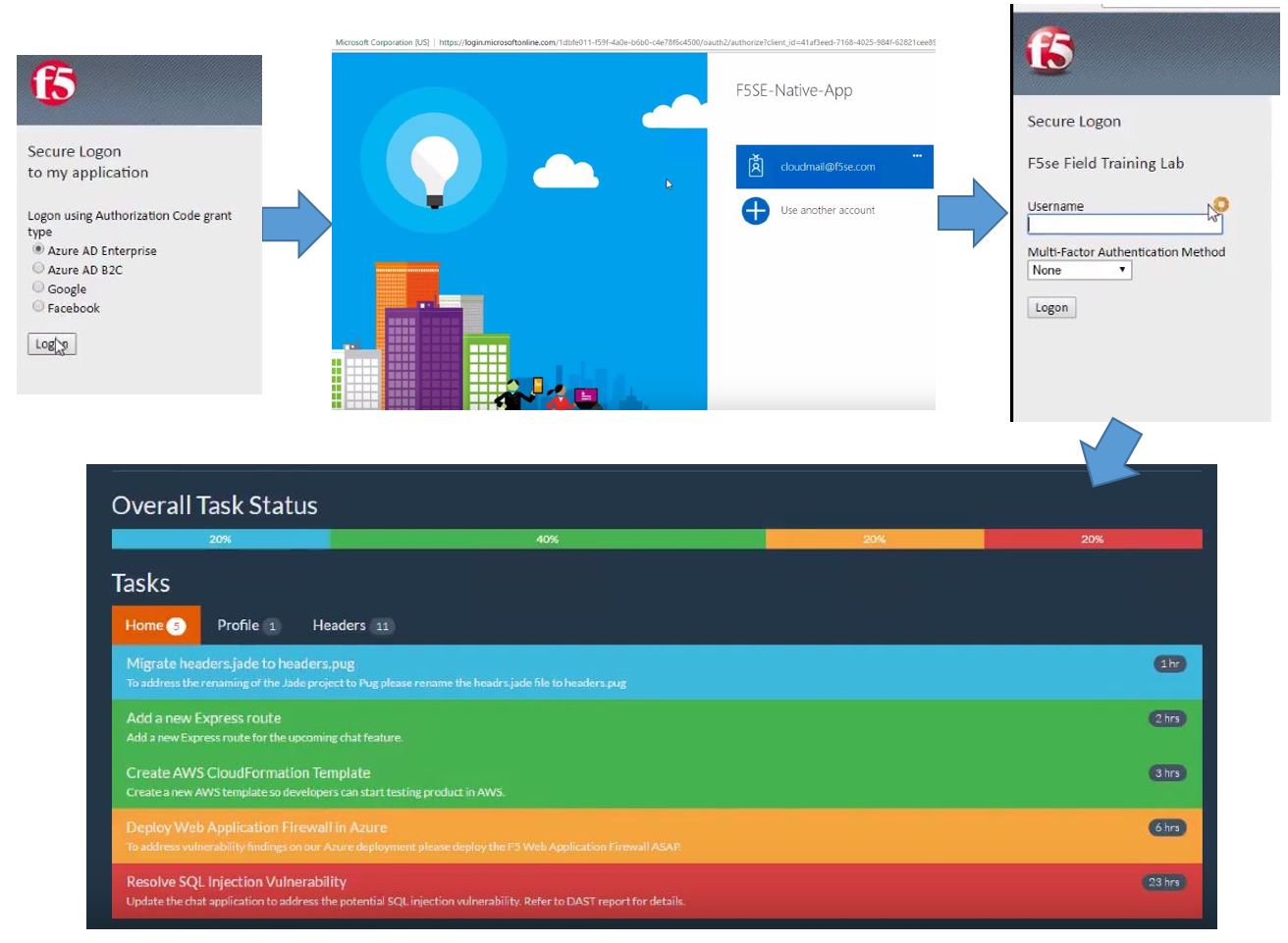
Let's look at BIG-IP’s capabilities (from the user's perspective) as an OAuth Client, OAuth Resource Server. We’ll navigate to our BIG-IP login screen and immediately you’ll notice it looks slightly different than your typical APM login.


Here, you now have a choice and can authenticate using any one of the 4 external resources. Azure AD Enterprise and AD B2C along with Google and Facebook. Google and Facebook are very popular social login choices - as shown in the initial image above - where organizations are looking to authenticate the users and allow them to authorize the sharing of information that Google and Facebook already have, with the application.

In this case, we have an application behind BIG-IP that is relying on getting such information from an external third party. For this, we’ll select Facebook. When we click logon, BIG-IP will redirect to the Facebook log into screen.

Now we’ll need to log into Facebook using our own personal information. And with that, Facebook has authenticated us and has sent BIG-IP critical info like name, email and other parameters.


BIG-IP has accepted the OAuth token passed to it from Facebook, extracted the info from the OAuth scope and now the application knows my identity and what resources I’m authorized to access.

We can do the same with Google. Select the option, click logon and here we’re redirected to the Google authentication page. Here again, we enter our personal credentials and arrive at the same work top.


Like Facebook, Google sent an authorization code to BIG-IP, BIG-IP validated it, extracted the username from the OAuth scope, passed it to the backend application so the application knows who I am and what I can access.

Let's look at Microsoft. For Microsoft, we can authenticate using a couple editions of Azure AD – Enterprise and B2C. Let’s see how Enterprise works. Like the others, we get redirected to Microsoftonline.com to enter our MS Enterprise credentials.

In this instance, we’re using an account that’s been Federated to Azure AD from another BIG-IP and we’ll authenticate to that BIG-IP. At this point that BIG-IP will issue a SAML assertion to Azure AD to authenticate me to Azure AD. After that, Azure AD will issue an OAuth token to that BIG-IP. BIG-IP will accept it, extract the user information and pass it to the application.

Finally, let’s see how Azure AD B2C works. B2C is something that companies can use to store their non-corporate user base. Folks like partners, suppliers, contractors, etc. B2C allows users to maintain their own accounts and personal information. In addition, they can login using a typical Microsoft account or a Google account. In this case, we’ll simply use a Microsoft account and are directed to the Microsoft authentication page.


We’ll enter our personal info, the servers communicate and we’re dropped into our WebTop of resources.

Social logins can not only help enterprises offer access to certain resources, it also improves the overall customer experience with speed and convenience and allows organizations to capture essential information about their online customers.

ps

Related:

Wednesday, January 20, 2016

Internet of Insider Threats

Identify Yourself, You Thing!

Imagine if Ben Grimm, aka The Thing, didn’t have such distinctive characteristics like an orange rocky body, blue eyes or his battle cry, ‘It’s Clobberin’ Time!’ and had to provide a photo ID and password to prove he was a founding member of the Fantastic Four. Or if the alien in John Carpenter’s The Thing gave each infected life-form the proper credentials to come and go as they please. Today the things we call ‘Things’ are infiltrating every aspect of society but how do organizations identify, secure and determine access for the 15+ connected chips employees will soon be wearing to the office? And what business value to they bring?

Gartner refers to it as the ‘Identity of Things’ (IDoT) and an extension to identity management that encompasses all entity identities, whatever form those entities take. According to Gartner, IoT is part of the larger digital business trend transforming enterprises. It means that the business, the people/employees and the ‘things’ are all responsible in delivering business value. The critical part is the relationships between or among those participants so the business policies and procedures can reflect those relationships. Those relationships can be between a device and a human; a device and another device; a device and an application or service; or a human and an application or service.

For instance, how does the system(s) know that the wearable asking for Wi-Fi access is the one connected to your wrist? It really doesn’t since today’s Identity and Access Management (IAM) systems are typically people-based and unable to scale as more entities enter the workplace. Not to mention the complexity involved with deciding if the urine powered socks the VP is wearing gets access. The number of relationships between people and the various entities/things will grow to an almost unmanageable point. Could anyone manage a subset of the expected 50 billion devices over the next 4 years? And set policies for data sharing permissions? Not without a drastic change to how we identify and integrate these entities.

Talk about the Internet of Insider Threats. That's IoIT for those counting.

Gartner suggests that incorporating functional characteristics of existing management systems like IT Asset Management (ITAM) and Software Management Systems (SAM) within the IAM framework might aid in developing a single-system view for IoT. The current static approach of IAM doesn’t take into account the dynamic relationships, which is vital to future IAM solutions. Relationships will become as important as the concept of identity is for IAM in the IDoT, according to Gartner.

My, your, our identities are unique and have been used to verify you-are-you and based on that, give you access to certain resources, physical or digital. Now our identities are not only intertwined with the things around us but the things themselves also need to verify their identity and the relationship to ours.

I can hear the relationship woes of the future:
A: I’m in a bad relationship…
B:Bad!?! I thought you were getting along?
A:We were until access was denied.
B:What are you talking about? You guys were laughing and having a great time at dinner last night.’
A:Not my fiancé…it’s my smart-watch, smart-shoes, smart-socks, smart-shirt, smart-pants, smart-belt, smart-glasses, smart-water bottle, smart fitness tracker and smart-backpack.'
IT said, 'It’s not you, it’s me.'

ps

Connect with Peter: Connect with F5:
o_linkedin[1] o_rss[1] o_twitter[1]   o_facebook[1] o_twitter[1] o_slideshare[1] o_youtube[1]

Wednesday, November 4, 2015

Ask the Expert – Why Identity and Access Management?

Michael Koyfman, Sr. Global Security Solution Architect, shares the access challenges organizations face when deploying SaaS cloud applications. Syncing data stores to the cloud can be risky so organizations need to utilize their local directories and assert the user identity to the cloud. SAML is a standardized way of asserting trust and Michael explains how BIG-IP can act either as an identity provider or a service provider so users can securely access their workplace tools. Integration is key to solve common problems for successful and secure deployments.

ps

Related:

Connect with Peter: Connect with F5:
o_linkedin[1] o_rss[1] o_twitter[1]   o_facebook[1] o_twitter[1] o_slideshare[1] o_youtube[1]

Tuesday, September 30, 2014

Oracle OpenWorld 2014: Identity & Access Management in the Cloud (feat Deang)

Rubyanne Deang, F5 Global Field Systems Engineer, shares some insight on many identity and access challenges organizations face when deploying applications in the cloud. Multiple directories, orphaned accounts and business risk all make the list. Not to leave you hanging however, she also guides on how organizations can solve this dilemma with BIG-IP.


ps

Related:


Connect with Peter: Connect with F5:
o_linkedin[1] o_rss[1] o_twitter[1]   o_facebook[1] o_twitter[1] o_slideshare[1] o_youtube[1]

Wednesday, May 21, 2014

Moving Target

bekinsblur I moved recently. Not too far away nor to a different state, just the other side of town. It is simultaneously exhilarating and exhausting. Most people in the U.S. moving during the summer. Kids are out of school, the weather is mostly nice, friends might be available to help and you are settled in for the holidays. And while you are worrying about packing, movers, mail and all the other check lists, your identity is ripe for the picking.

The increased risk of identity theft during a move is because personally identifiable information is being shuffled around from one home to the next. At the same time, buyers and renters are preoccupied with the move and can forget to protect their sensitive documents. You may lock up or personally carry your jewelry, checkbook and other 'valuables' but your personal information might be unprotected and targeted during a move.

If you are moving this summer like I just did, there are a few things you can do to minimize the risk. While most moving sites have 'Change of Address' as their top protection mechanisms (which we'll get to), I feel that shredding old bills, receipts and financial info is critical. First, you might not want to drag all that old paperwork with you, especially if you are paying by the pound but more importantly, shredding important documents can prevent thieves from finding any information in your trash. Old-skool dumpster diving is still a viable method to steal personal information. You also might not want the movers themselves to have access to those documents, particularly if you are having them help pack. I was fortunate to find reputable movers but mover fraud is becoming more commonplace in the U.S.

Mail call! What? Oh yea, Change of Address. Seems like a no brainer, filling out a postal change of address but it is also important. Make the change with all the companies, financial institutions, magazines, and other organizations that regularly send you mail. Identity theft is often carried out by stealing mail. The folks who move into your old house might not steal your identity, but they will most likely throw away mail that isn’t theirs, and they won’t necessarily take the care to shred it as you would. If your mail continues to be delivered to your old address, it might be left on the doorstep or in an unlocked mailbox, making it very easy for anyone to walk away with it.

Lock down your electronics. Many households have multiple computers now including tablets, mobile phones and other 'things' storing sensitive information. These are a treasure trove. You can carry/pack yourselves and make sure they are always in your possession or password protect and place in a slightly unmarked box. Maybe label it as 'dog food' and the crook, movers or otherwise, just might pass it over. If you plan on donating or recycling your old computer(s), make sure you totally erase the hard drive since criminals can easily retrieve those files and sue them for no good. Slightly related to this, I recently bought a refurbished Blu-ray player with various streaming services. I wanted to replace the one we broke with the exact same one but they stopped making that model. When it arrived, I went in to configure our Netflix account. So I clicked the Netflix icon and it loaded fine. Wait a minute, that's not my Instant Que. Whoever had the unit prior to me, still had their Netflix saved and I could see all their viewing habits. Old episodes of Leave it to Beaver and Attack of the 50 Foot Cheerleader.

And keep an eye out for yourself before, during and after. Check credit monitoring if you have it; your credit report a few months later for anything suspicious; that all your mail is arriving intact; that all your household items are accounted for; and we often leave cars, garages, and other entrances wide open when moving so keep an eye there, if the location warrants.

Physical items can be used to create digital identities and while we may read about ID theft topics when computer breaches are reported, the physical realm is still ripe with fraudsters. Everything is game nowadays but you can take physical and digital action to stay safe when you are finally home sweet home.

ps

Resources:


Connect with Peter: Connect with F5:
o_linkedin[1] o_rss[1] o_twitter[1]   o_facebook[1] o_twitter[1] o_slideshare[1] o_youtube[1]

Wednesday, March 5, 2014

So Where Do We Go From Here?

If you are who you say you are.

I've been travelling the last few weeks shooting some videos for VMware PEX and RSA. When that happens, my browser tabs get crowded with the various stories I'm interested in but will read later. This time they all seemed to hover around Identity Theft. When I got home, in my awaiting physical mail was a letter from Target. I also returned something to a national hardware store and the cashier tried to crumple my credit-card-info-having receipt into a trash can. Kismet.

Let's take a look...

The FTC recently announced that Identity Theft is the #1 complaint in 2013, for the 14th consecutive year. Is that a record? While down slightly from 2012, it still accounted for 14% of the 2 million overall complaints. This is down from 18% in 2012. Florida, followed by Georgia and California were the worst hit states for ID theft. The IRS has also named Identity Theft as their #1 Dirty Dozen Tax scam for 2014.

Speaking of California, 7.5 million of the over 110 million breached Target accounts were Californians. California is one of the few states that require disclosure when more than 500 accounts are compromised. The first year California required reports, 2012, there were 131 breaches reported...in 2013 that rose to 170. The other interesting thing about California breaches is that many target smaller companies. In 2012, half of the reported breaches came from companies with fewer than 2500 employees and almost a third were businesses with less than 250 employees. Being small and relatively unknown is no shield.

Also in Southern California, the Feds busted a couple guys running a Tijuana-based identity theft ring. These dudes broke into a U.S. based mortgage broker's servers and siphoned off mortgage applications which included most of the borrower's personal info: name, birthday, SSN, DL number, tax info, the works. They then used that info to open credit lines and, with the info they had, were able to change access to the people's brokerage accounts. From there, transferring money to other accounts was a snap. From Dec 2012 thru June 2013 they stole personal data on 4200 individuals.

Javelin Strategy and Research released their annual 2014 Identity Fraud Study stating that in 2013, a new instance of identity fraud occurred every 2 seconds. 1 Mississippi, 2 Mississippi. Another. There was 13.1 million identity fraud victims on 2013. While the people number is going up, the actual money stolen, according to Javelin, in going down. They estimated that the total cost of identity fraud in 2013 to be around $18 billion, more than $3 billion less than 2012. 2004 holds the record at $48 billion. Attackers are now focusing on opening new accounts rather than piggy backing existing credit cards. Account take-over's, particularly for utilities and mobile phones are the new free-bees. Most of the stolen info appears to be from corporate breaches and about 1/3 of those who receive a breach letter actually becomes a theft victim. Your debit card also seems more valuable than your social security number. 46% of consumers with breached debit cards became victims verses only 16% of breached SSNs.

And in an interesting twist, the top complaint against debt collectors is mistaken identity. Trying to collect a debt from the wrong person was by far, the most common complaint to the Consumer Financial Protection Bureau (CFPB). I know this all too well since over the last 3+ years, we've been getting debt collection calls looking for a certain person. We tell them that we've had our phone number for years and stop calling. Few months go by, the debt gets sold to another collector and we get calls again. It got so bad that this person's own mother called to tell her son that the dad was in the hospital and probably wouldn't make it. About 2 weeks later we got a call from another family member looking to talk about the father's death. This guy was running from debt so much so, that his own mother couldn't get a hold of him when dad was on his death bed. Now that's bad.

So where do we go from here? Will we all need that personal chip installed on our left earlobe to verify identity? The payment terminal says, 'Please listen for verification.' Riff-raff will then be all like, 'Oh, listen to this cool song,' as they plug the bud into your ear only to suck the data off your PID chip. You didn't hear? That's our IPv6 Personal Identity Chip inserted into every newborn starting in 2025.

Oh, it will happen.

ps

Related:


Connect with Peter: Connect with F5:
o_linkedin[1] o_rss[1] o_twitter[1]   o_facebook[1] o_twitter[1] o_slideshare[1] o_youtube[1]